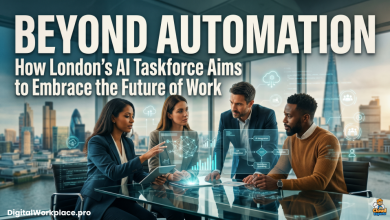
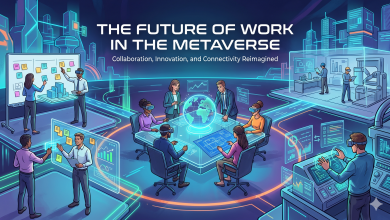
 In their insightful 2025 article “AI agents are the future of work, your workforce and workers”, PwC powerfully articulates the crossroads facing business leaders today.
While many remain skeptical due to overhyped promises and uneven returns from early AI investments, the article makes a compelling case: AI agents are poised to fundamentally reshape work, workforce, and workers within the next 12–24 months.
Far beyond simple automation, these agentic systems can reason, plan, adapt, and execute complex workflows—unlocking a new era of augmented intelligence where humans and AI collaborate to achieve outcomes neither could reach alone.
The Shift to Augmented Intelligence
PwC emphasizes moving past narrow efficiency gains (5–20% improvements) toward a blank-sheet redesign of processes. AI agents are already delivering transformative results: 50%+ productivity boosts in software development, customer service, and drug discovery; tax documents produced in a day instead of weeks; and major gains in finance and auditing.
This is not about replacing humans but creating hybrid human-AI teams. Agents handle reasoning, context understanding, creative problem-solving, and routine execution, while humans provide strategic judgment, ethical oversight, and high-level direction. PwC calls this the “human-at-the-helm” model — essential for responsible scaling.
Real-World Wins: Retail and Tech Examples
The article showcases two compelling case studies:
- A global retail giant partnered with PwC to build a centralized AI hub for developing and deploying agents at scale. In software development alone, they achieved up to 60% shorter cycle times and halved production errors. The company is now reorganizing roles, building new skills, and creating interconnected agent ecosystems (e.g., for global supply chain management).
- A major technology company deployed AI agents across an omnichannel contact center, using predictive intent, adaptive dialogue, and real-time analytics to deliver hyper-personalized customer experiences. A centralized agent management hub ensures orchestration, consistency, and governance.
These examples illustrate PwC’s core message: success comes from thinking like an AI-native company — reimagining work, restructuring the workforce, and embedding responsible AI practices.
Building on PwC’s Vision: Practical Steps for Leaders
PwC outlines five smart starting actions:
- Start with strategy — Identify high-value AI opportunities aligned to business goals.
- Reimagine work — Redesign processes for hybrid teams and multi-agent orchestration.
- Restructure your workforce — Define new roles, skills, and talent strategies.
- Help workers reimagine themselves — Build psychological safety, new skills, and a culture of continuous learning.
- Embed Responsible AI — Establish strong governance from day one.
The Road Ahead: Orchestration and Competitive Edge
As organizations scale beyond individual agents, orchestration becomes critical. PwC highlights solutions like their own AI Agent Operating System to manage disparate agents, reduce complexity, and maintain control.
PwC’s Agent OS (AI Agent Operating System), launched in March 2025, is a comprehensive enterprise platform designed to move organizations from fragmented AI experiments to governed, scalable AI workforces. It acts as a unified command center for building, orchestrating, integrating, monitoring, and governing AI agents across the enterprise — even when those agents come from different vendors and platforms
Agent OS addresses one of the biggest challenges in scaling AI: moving beyond isolated pilots to connected, enterprise-wide workflows. It promises to accelerate the creation and deployment of complex, multi-agent processes up to 10x faster than traditional development methods.
The winners in this new era will treat AI agents not as tools but as digital teammates that expand capacity, accelerate innovation, and enable agility. Companies that act decisively — starting with strategy, governance, and organizational redesign — can create lasting competitive advantages that skeptics may never overcome.
The digital workforce revolution is accelerating. As PwC aptly concludes, those who persevere and think big will generate superior value and performance. The future of work has arrived — the only question is whether your organization is ready to lead it.