Buyers Guide to Digital Workplace Intranets
Discover the essential Buyer's Guide to Digital Workplace Intranets: Key benefits (20-30% productivity boost!), top vendors compared and how to transform communication + engagement.

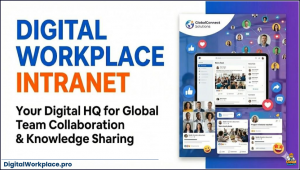 In today’s fast-paced business environment, a corporate intranet serves as a centralized digital hub that connects employees, streamlines operations, and fosters a collaborative culture.
Implementing one can transform how organizations manage information and interactions, leading to measurable improvements in efficiency and engagement.
Below, we outline the primary benefits, drawing from established best practices in digital workplace management.
One of the foremost advantages is enhanced communication and collaboration. An intranet provides a single platform for sharing company news, updates, and resources, reducing reliance on scattered emails or external tools. Employees can participate in discussions, share files, and collaborate on projects in real-time, breaking down silos between departments and remote teams. This leads to faster decision-making and a more cohesive workforce.
Another key benefit is centralized knowledge management. Intranets act as a repository for documents, policies, training materials, and FAQs, making it easy for employees to access critical information without searching multiple systems. This not only saves time but also ensures consistency in information dissemination, minimizing errors and supporting compliance with regulatory standards.
Improved productivity is a direct outcome of these features. By integrating with tools like calendars, task managers, and productivity apps, intranets automate routine processes such as onboarding, approvals, and reporting. Employees spend less time on administrative tasks and more on value-added work, potentially boosting overall output by 20-30% in well-implemented systems.
Intranets also drive employee engagement and satisfaction. Features like social feeds, recognition programs, and personalized dashboards make the platform feel more like a community than a corporate tool. This can improve morale, reduce turnover, and encourage innovation through idea-sharing forums.
Finally, security and scalability are paramount. Modern intranets offer robust access controls, encryption, and audit trails to protect sensitive data. They scale with business growth, integrating with cloud services and AI-driven analytics to provide insights into usage patterns and areas for improvement.
Overall, a well-chosen intranet aligns with strategic goals, adapting to hybrid work models and evolving technologies to keep organizations competitive.
Vendor Options for Corporate Intranets
Based on recent analyst reports and user reviews from sources like Gartner, Forrester, and G2, here is a curated list of leading intranet vendors for 2026. The table below includes the company name (hyperlinked to their website), a brief description of their focus, and key strengths to aid in your evaluation. Pricing and features vary by organization size and needs, so contact vendors for tailored demos.
| Vendor | Description | Key Strengths |
|---|---|---|
| Simpplr | Modern intranet focused on employee experience and AI-driven personalization. | High user adoption, seamless integrations, strong analytics. |
| Unily | Enterprise-grade platform emphasizing governance and content management. | Customizable interfaces, robust security, Microsoft 365 integration. |
| Workvivo | Social intranet acquired by Zoom, prioritizing engagement and culture. | Mobile-first design, recognition tools, video integration. |
| LumApps | Unified digital workplace for desk and frontline teams. | Google Workspace compatibility, AI search, multichannel communication. |
| Staffbase | Employee communication platform for distributed workforces. | Frontline focus, governance features, AI accountability. |
| Interact | AI-driven intranet for content discovery and collaboration. | Intuitive search, personalization, analytics dashboards. |
| Igloo | Cloud-based solution for knowledge sharing and decentralization. | Flexible publishing, community features, scalability. |
| Haiilo | Engagement platform combining intranet and advocacy tools. | Social features, employee advocacy, multi-language support. |
| MangoApps | All-in-one intranet for frontline and desk workers. | Project management integration, mobile apps, affordable pricing. |
| Firstup | Intelligent communication platform for personalized experiences. | Omnichannel delivery, AI personalization, measurable ROI. |
| Microsoft SharePoint | Traditional intranet with document management and collaboration. | Deep Microsoft ecosystem integration, enterprise security, vast customization. |
| Appspace | Workplace experience platform integrating modern intranet with employee communications, digital signage, space reservation, and visitor management. | AI-powered personalization and content creation, multi-channel delivery (including mobile and signage), strong for hybrid/frontline teams, quick setup, unified analytics. |
| Enablo | Mobile-first digital workplace platform unifying communications, HR, operations, and IT tools in one customizable hub, with a focus on frontline and distributed workforces. | Strong engagement uplift (up to 85%), seamless mobile access, AI-driven search, two-way interactions (polls, chat, feedback), workflow automation, proven scalability for large dispersed teams (750,000+ users). |
| Omnia | Microsoft 365-based intranet platform focused on communication, collaboration, and governance for enterprise and frontline workers. | Deep integration with Microsoft 365, AI-driven content targeting, mobile accessibility, strong governance and compliance tools, customizable for complex organizations. |
| Happeo | Digital workplace hub for Google-centric organizations. | Channel-based communication, people search, unified integrations. |