The Future of Work: Navigating the AI Shift
AI is not merely augmenting tasks—it's fundamentally rewriting the rules of how work gets done, who does it, and what skills matter most.

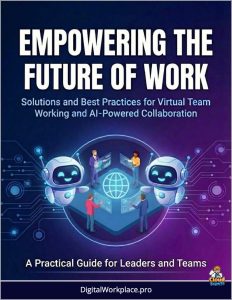 Microsoft’s vision for the future of work centers on a profound transformation driven by AI, particularly through tools like Microsoft 365 Copilot.
In recent discussions between futurist Sinead Bovell and Colette Stallbaumer, General Manager of Microsoft 365 Copilot and co-founder of Microsoft WorkLab, they state this shift is already underway.
AI is not merely augmenting tasks—it’s fundamentally rewriting the rules of how work gets done, who does it, and what skills matter most.
From Doing the Work to Directing the Work
One of the core ideas Stallbaumer emphasizes is the move from doing the work to directing the work. Traditionally, knowledge workers have spent significant time on execution: drafting documents, analyzing data, summarizing meetings, or handling routine communications. With AI agents and copilots integrated into everyday tools, these repetitive or time-intensive elements can be automated or accelerated.
This frees humans to take on a director-like role—orchestrating outcomes, setting strategic directions, refining AI outputs, making nuanced judgments, and focusing on high-value creative or interpersonal elements that machines cannot replicate effectively. Stallbaumer highlights how employees are becoming “agent bosses,” building, delegating to, and managing AI agents much like team members. For example, a professional might direct one agent to scan research, another to perform analyses, and a third to draft summaries, allowing deeper focus on interpretation and innovation.
This isn’t about replacement but amplification and redefinition. AI handles the “doing,” while people excel at the “directing”—guiding intent, ensuring ethical alignment, and driving meaningful impact. As Stallbaumer notes in Microsoft’s ongoing Work Trend Index insights and related discussions, this levels the playing field, enabling people at all career stages to navigate and thrive amid rapid change.
Curiosity as a Critical Competitive Advantage
In an AI-augmented world where technical execution becomes more democratized, curiosity emerges as a standout differentiator. Stallbaumer stresses that as AI handles more baseline tasks, the ability to ask better questions, experiment boldly, learn rapidly, and adapt becomes essential.
Curiosity drives employees to explore AI’s capabilities creatively—testing prompts, iterating on outputs, or even building custom agents—turning tools into personal superpowers. It’s no longer sufficient to be proficient in current skills; those who remain curious will continuously upskill, discover new applications, and stay ahead as roles evolve. Stallbaumer ties this to broader shifts: with projections that a significant portion of workforce skills will change dramatically in the coming years, curiosity, resilience, and adaptability form the foundation for long-term success.
Far from “soft skills,” these traits enable individuals to partner effectively with AI rather than compete against it. Encouraging experimentation—even outside formal training—helps build AI fluency and positions curious minds as indispensable in an era of constant reinvention.
Empowering Every Employee to Shape the Future
A key part of Microsoft’s vision is democratization—AI’s impact isn’t reserved for executives or tech specialists. Stallbaumer emphasizes that employees at every level can actively shape the future of work. From entry-level roles to mid-career professionals, individuals are collectively navigating this transition.
Tools like Microsoft 365 Copilot make advanced AI accessible in familiar apps (Word, Excel, Teams, etc.), allowing anyone to boost productivity, generate insights, or automate workflows. This inclusivity means frontline workers, analysts, creators, and managers alike can experiment, provide feedback, and influence how AI evolves in their organizations.
Stallbaumer advocates for a mindset where everyone becomes proactive: using AI to tackle the “infinite workday,” scaling impact, and redefining responsibilities. By collaborating with AI agents, reimagining roles, and focusing on human strengths like judgment, empathy, and strategic thinking, individuals contribute to building more fulfilling, efficient workplaces.
Ultimately, Microsoft’s outlook is optimistic: AI isn’t about job loss but about job evolution and greater human potential. As Bovell and Stallbaumer explore, preparing involves embracing change, cultivating curiosity, and stepping into the director’s chair. The future of work belongs to those who learn to work with AI—directing it thoughtfully to amplify what makes us uniquely human.